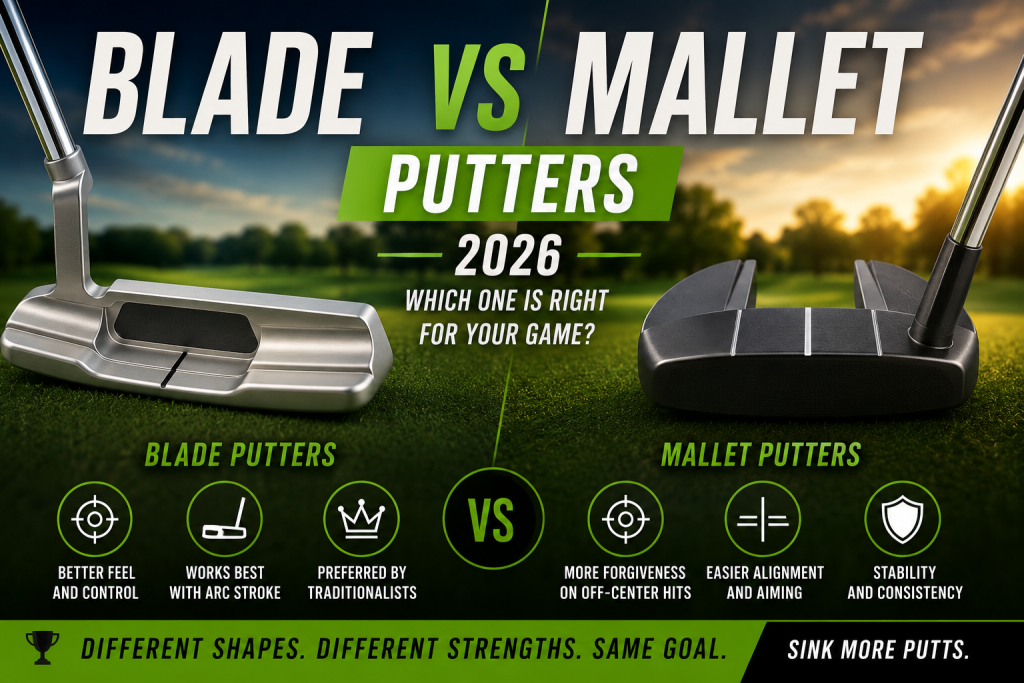
Blade vs Mallet Putters (2026) – Which One Is Right for Your Game?
Choosing the right putter can make a huge difference to your scores, yet many golfers overlook just how important it is. Since putting makes up a large part of every round, using the right style of putter can instantly improve your consistency.
One of the most common questions golfers ask is: blade or mallet putter?
While both options can perform well, they are designed for different types of players and putting strokes. In this guide, we’ll break down the key differences, along with the pros and cons of each, so you can choose the best option for your game.
What Is the Difference Between Blade and Mallet Putters?
At the most basic level, the difference comes down to shape and design.
Blade putters are traditionally narrow and compact, offering a classic look, whereas mallet putters are larger and come in a variety of shapes designed to increase stability and forgiveness.
Because of these design differences, each type performs differently on the greens.
Blade Putters Explained
Blade putters are the traditional choice and have been used for decades. Typically, they feature a slim head with a simple design and minimal alignment aids.
Key Characteristics:
- Compact head shape
- More weight toward the toe and heel
- Clean, traditional look
- Greater emphasis on feel and control
Because of their design, blade putters tend to suit golfers who prefer a more natural, flowing stroke.
Pros of Blade Putters
Better Feel and Feedback
Blade putters provide excellent feedback at impact. As a result, you can more easily judge distance and control your speed, especially on longer putts.
More Precision
Because they are less forgiving, they reward a consistent stroke with very accurate results.
Classic Look
Many golfers prefer the simple, traditional appearance at address, which can boost confidence.
Cons of Blade Putters
Less Forgiving
Since the sweet spot is smaller, mishits can lead to inconsistent results.
Harder to Align
With fewer alignment aids, it can be more difficult to aim correctly.
Requires Consistency
Blade putters demand a more repeatable stroke to perform well.
Mallet Putters Explained
Mallet putters are larger and more modern in design. They often feature bold shapes, alignment lines, and advanced weighting to improve stability.
Key Characteristics:
- Larger clubhead
- Weight distributed around the perimeter
- High MOI (forgiveness)
- Strong alignment aids
Because of these features, mallet putters are generally easier to use, especially for beginners.
Pros of Mallet Putters
More Forgiveness
Due to their high MOI, mallet putters resist twisting on impact, which helps keep putts on line even when you don’t strike the centre.
Easier Alignment
Most mallet putters include clear alignment aids, making it easier to aim correctly.
More Consistent Stroke
Because of their balance and weight distribution, they promote a smoother, more stable stroke.
Cons of Mallet Putters
Less Feel on Long Putts
Some golfers find it harder to control distance on longer putts.
Bulkier Design
The larger head can feel less natural to players who prefer a traditional look.
Reduced Workability
Compared to blades, mallets offer less ability to manipulate the face.
Blade vs Mallet: Key Differences
Here’s how they compare directly:
- Forgiveness: Mallet putters win
- Feel: Blade putters win
- Alignment: Mallet putters are easier
- Control: Blade putters offer more precision
- Ease of use: Mallet putters are better for most golfers
Which Putter Suits Your Stroke?
Choosing between a blade and mallet putter often comes down to your putting stroke.
Arc Stroke → Blade Putter
If your putting stroke has a natural arc, a blade putter is often the better fit. Because of its toe weighting, it allows the face to open and close naturally during the stroke.
Straight Stroke → Mallet Putter
If you putt straight back and through, a mallet putter is usually more suitable. Its face-balanced design helps keep the face square throughout the stroke.
Popular Blade and Mallet Putters
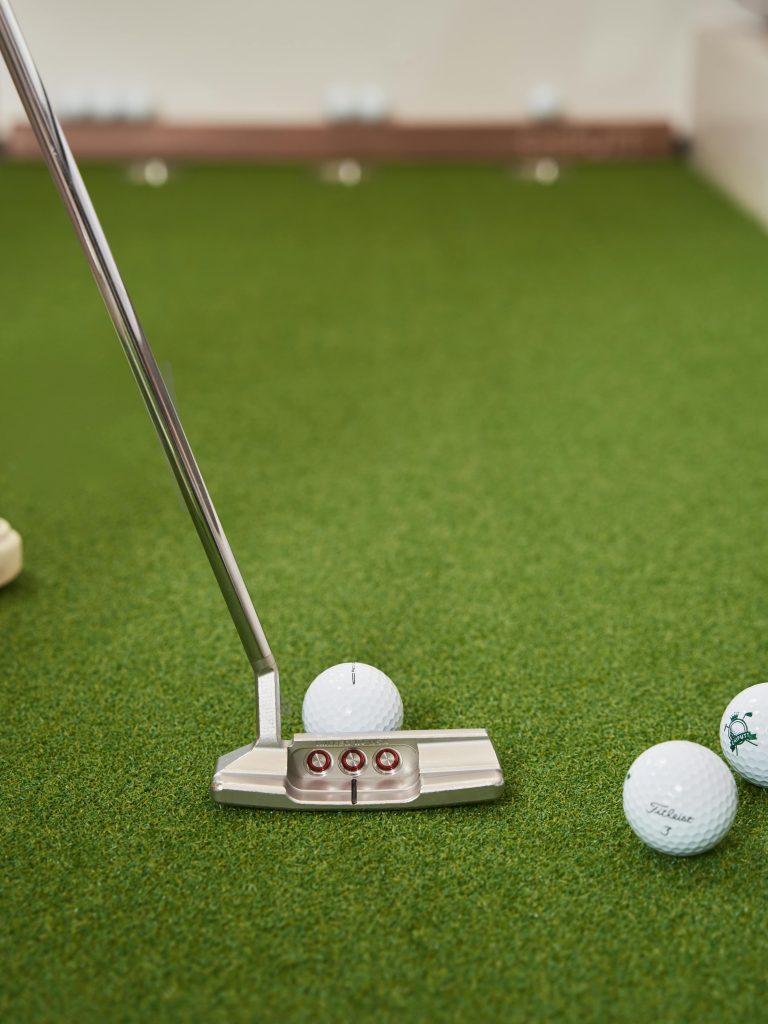
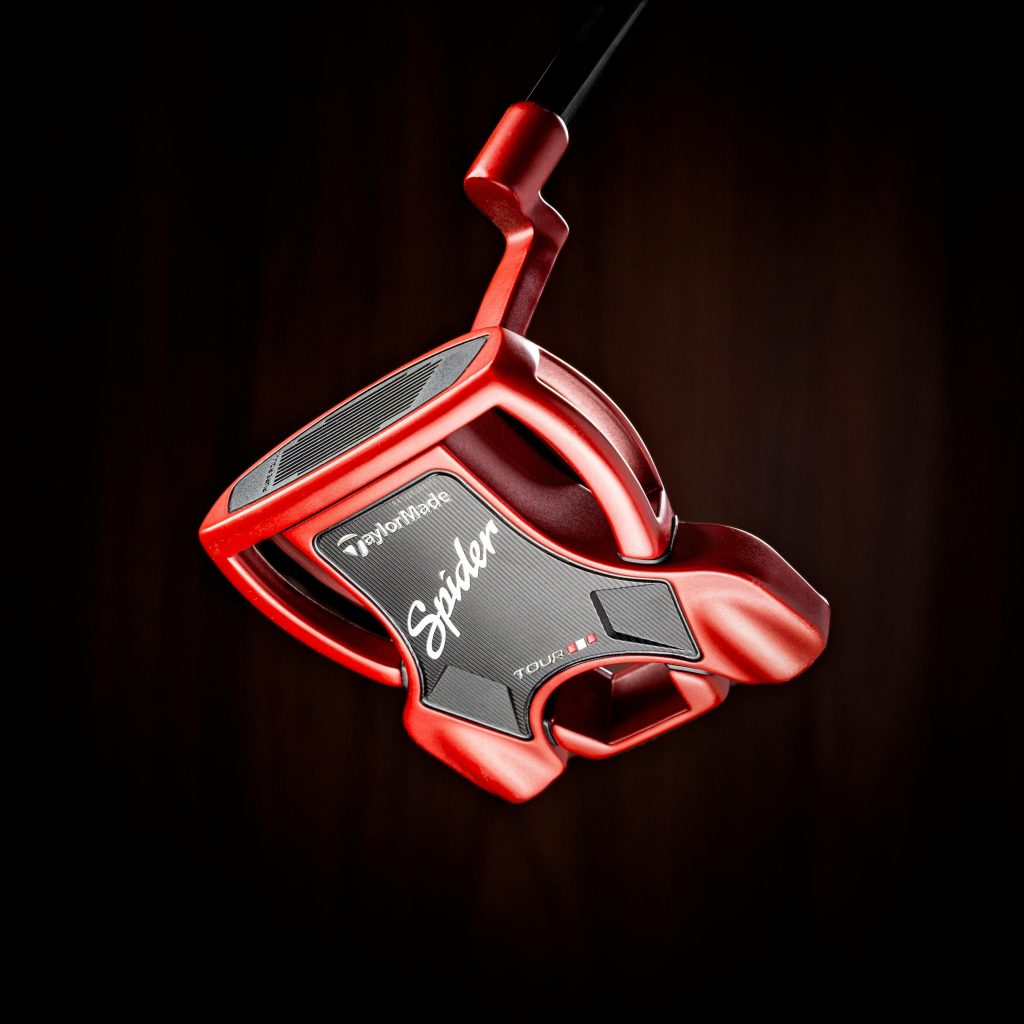
Here are a couple of examples to give you an idea of each style:
Blade Putter Mallet Putter
Which Is Better for Beginners?
For most beginners, mallet putters are the better choice.
Because they offer:
- More forgiveness
- Easier alignment
- Greater consistency
They make it easier to develop confidence on the greens.
However, that doesn’t mean blades are a bad option — especially if you prefer a traditional feel.
Do Pros Use Blade or Mallet Putters?
Interestingly, while blade putters were once dominant, more professionals now use mallet putters because of their forgiveness and consistency.
However, some top players still prefer blades due to their feel and control.
Ultimately, it comes down to personal preference.
How to Choose the Right Putter
When deciding between blade and mallet, consider:
Your Stroke Type
Arc → Blade
Straight → Mallet
Your Skill Level
Beginner → Mallet
Experienced → Either
Your Preference
Feel → Blade
Forgiveness → Mallet
Confidence at Address
Whichever putter looks better to you will usually perform better.
Final Verdict
The choice between blade and mallet putters isn’t about which one is better — it’s about which one is better for you.
While blade putters offer superior feel and precision, mallet putters provide more forgiveness and consistency. As a result, most golfers — especially beginners — will benefit from using a mallet putter.
That said, if you value control and prefer a traditional look, a blade putter can still be a great option.
Quick Summary
- Blade putters: Better feel and control
- Mallet putters: More forgiveness and alignment
- Best for beginners: Mallet putters
- Best for feel: Blade putters